
About Sound Healing
What Is Sound Healing?
An ancient practice supported by modern science, sound healing uses vibration, resonance, rhythm, and other therapeutic techniques to reduce stress and support relaxation, restoration, and healing on all levels.
Long before sound healing became a modern wellness practice, cultures throughout the world recognized the profound relationship between sound, vibration, and human well-being.
Today, sound healing is experienced in a variety of settings from wellness centers and retreat spaces to workplaces, healthcare environments, and private sessions. While every experience is unique, many people describe sound healing as an opportunity to slow down, quiet the mind, reconnect with themselves, and access a deeper sense of presence.
What Is a Sound Bath Meditation?
Despite the name, there is no water involved!
A sound bath is an immersive listening experience in which participants are “bathed” in therapeutic sound vibrations created by instruments such as crystal singing bowls, gongs, chimes, ocean drums, tuning forks, and other instruments.
Unlike traditional meditation practices that often require concentration or effort, a sound bath meditation offers a more receptive experience. Participants are invited to simply rest, listen, and allow the sounds and vibrations to unfold around and through them.
Many people find this creates an accessible entry point into meditation, particularly if they struggle with quieting the mind on their own.
“If meditation is like taking the stairs, a sound bath is like taking an escalator.”
—Sara Auster, Sound Therapist
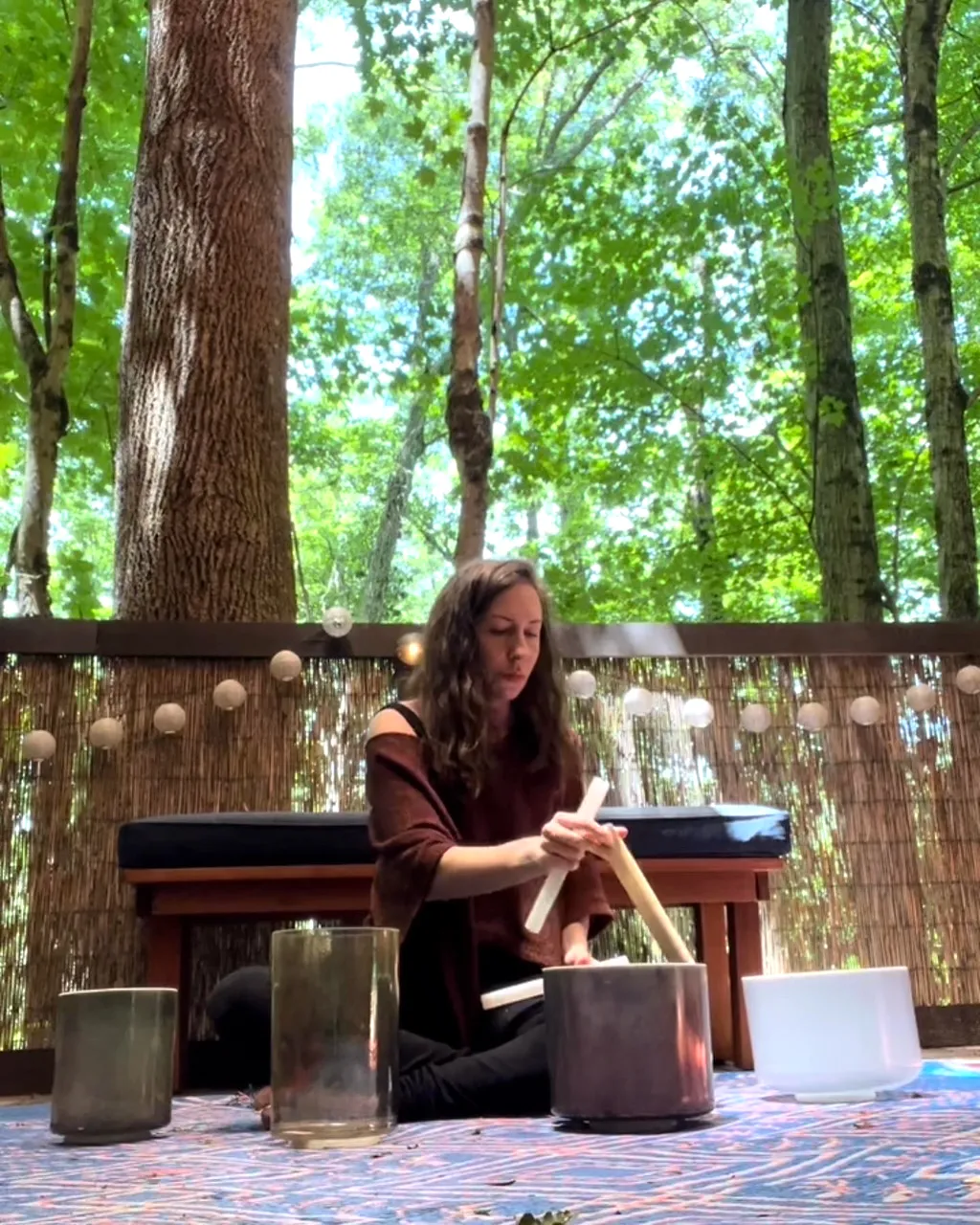
How Does Sound Healing Work?
While research into sound and vibration continues to evolve, several well-established principles help explain why sound can have such a profound effect on the human experience.
Resonance
Everything in the universe, including the human body, exists in a state of vibration.
When one vibrating object influences another, resonance occurs. Sound healing works with this natural principle, using carefully selected frequencies and tones to create an environment that encourages balance, harmony, and relaxation.
Entrainment
Entrainment refers to the tendency of biological rhythms to synchronize with external rhythms.
Just as people naturally begin walking in step together, the brain and nervous system can respond to steady auditory patterns. This may help explain why many people experience a greater sense of calm, focus, or relaxation during sound meditation.
Dissonance
While harmony is often associated with relaxation, carefully introduced dissonance can also play an important role in sound healing.
Dissonance occurs when two or more tones create a sense of tension or instability. In music, this tension often seeks resolution. In sound healing, moments of dissonance can help interrupt habitual patterns, capture attention, and create a greater appreciation for the return to harmony.
Just as challenge and contrast can foster growth in life, the intentional use of dissonance can enhance the overall experience by creating movement, release, and resolution within the soundscape.
Nervous System Regulation
Modern life often keeps us in states of chronic stimulation, stress, and mental activity.
Sound meditation offers an opportunity to shift away from constant doing and into a state that supports rest, restoration, and recovery. Many participants report feeling calmer, more grounded, and more present following a session.

The Science of Sound
One of the most fascinating aspects of sound is that it is both heard and felt.
Sound travels as vibration through air, water, and physical matter. Because the human body is composed primarily of water, sound has the unique ability to be experienced not only through the ears, but throughout the body.
Research continues to explore the relationship between sound, stress reduction, mood, nervous system activity, sleep quality, and overall well-being. While sound healing is not intended to diagnose, treat, or cure medical conditions, many people find it to be a valuable complement to their overall wellness practices.
Potential Benefits of Sound Healing
While experiences vary from person to person, participants commonly report:
• Deep relaxation
• Reduced stress and tension
• Improved sleep quality
• Increased mental clarity
• Enhanced mood and emotional well-being
• Greater sense of calm and presence
• Support for meditation and mindfulness practices
• Feelings of connection, insight, or inner awareness
Every experience is unique, and there is no “right” way to experience sound healing.
Who Is Sound Healing For?
Sound healing is remarkably accessible and can be experienced by people of all ages and backgrounds.
Offerings at The Native Path include:
• Personal sessions
• Couples sessions
• Special events and celebrations
• Workplace wellness programs
• Corporate events and conferences
• Hospitality partnerships
• Retreats
• Virtual sound meditation sessions
No prior experience with meditation or sound healing is required.
Experience Sound Healing for Yourself
While understanding the science and philosophy behind sound healing can be helpful, it is ultimately an experiential practice.
The most meaningful way to understand sound healing is to experience it firsthand.
Whether you’re seeking a personal session, planning a meaningful gathering, exploring workplace wellness offerings, or simply curious about what sound healing can offer, I’d be honored to support your journey.
Stay Connected
Join the path
Receive gentle notes on sound healing, upcoming events, and new offerings.